
Starting a podcast is easier when you make the decisions in the right order. This guide takes you from a vague idea to a published first episode with a simple, repeatable workflow.
Define the promise of your podcast
Write one sentence that completes this formula: “This podcast helps a specific listener understand or achieve something.” A narrow promise makes it easier to choose guests, examples and episode titles. Before naming the show, list ten questions your ideal listener would type into a search engine. If you can answer them without repeating yourself, the idea has enough room to grow.
The essential principleA podcast starts with a clear promise and improves with every episode you publish.
Choose a format you can sustain
Solo episodes are quick to schedule, interviews bring outside voices and narrative shows offer the most control but require more editing. Pick one main format, a realistic length and a publishing rhythm you can maintain for eight episodes. Consistency matters more than an ambitious weekly promise that disappears after launch.
Record your first episode with simple equipment
A quiet room and good microphone placement improve audio more than expensive gear in a reflective space. Place the microphone about a handspan from your mouth, slightly to one side, and record a short test. Listen for echo, background noise and clipping before recording the full episode. Headphones help you catch problems while they are still easy to fix.
Edit, publish and learn from real listeners
Remove long mistakes, balance the volume and add only the music you have permission to use. Export a clear master, write a title that describes the benefit and publish through a hosting service that creates an RSS feed. Ask a small group to listen and tell you where attention dropped. Use that evidence to improve episode two instead of polishing episode one forever.
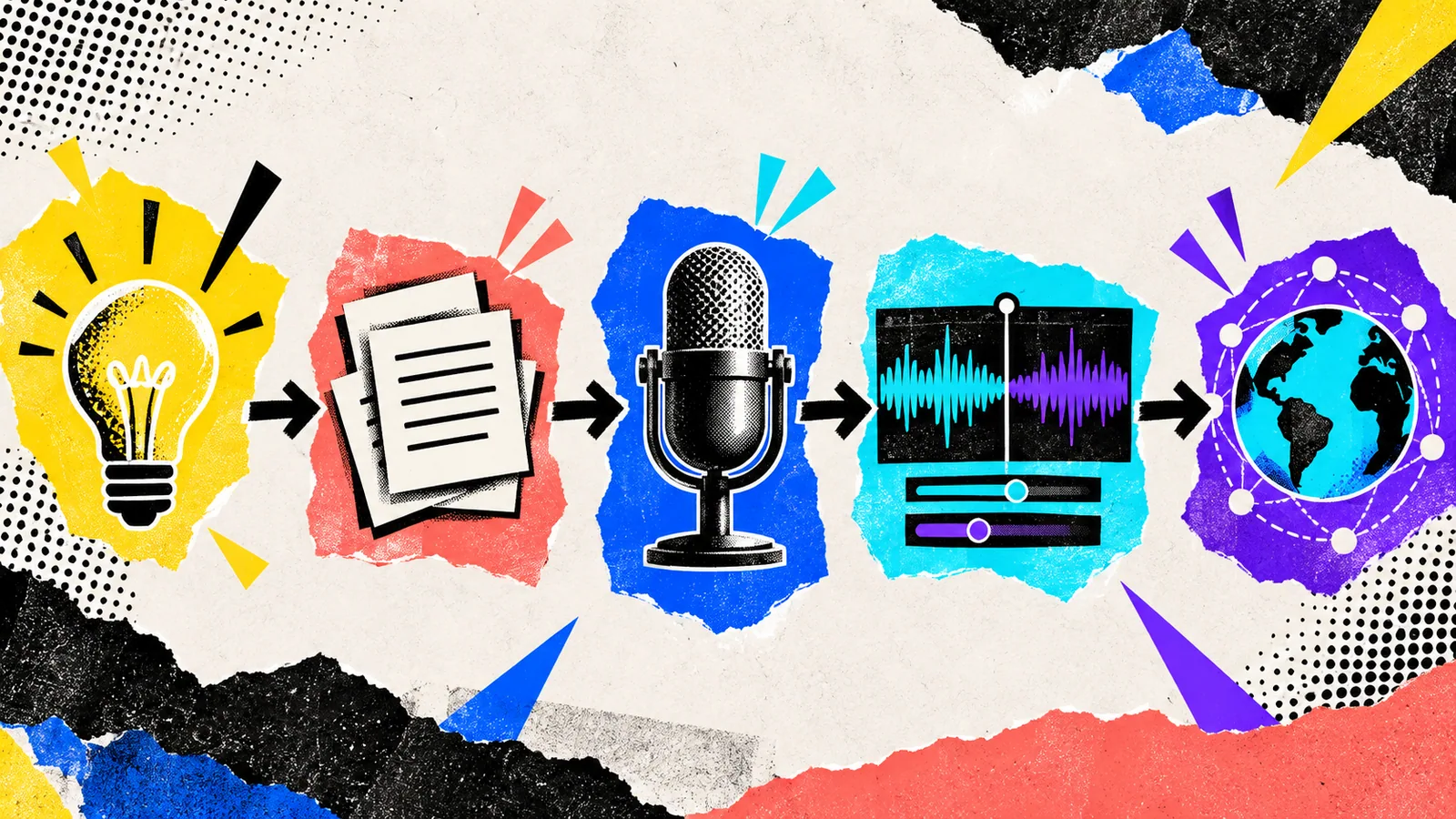
The minimum setup you need
You do not need a professional studio. These five pieces cover the essential path from idea to publication.
Define who the show is for and what listening delivers.
Order ideas without making the voice sound read.
Placement and a quiet room matter more than price.
Cut mistakes, balance volume and keep the voice natural.
Store the audio and create the RSS feed for distribution.
Invest first in reducing noise and improving your workflow. Buy equipment only when a specific limitation repeatedly affects the result.
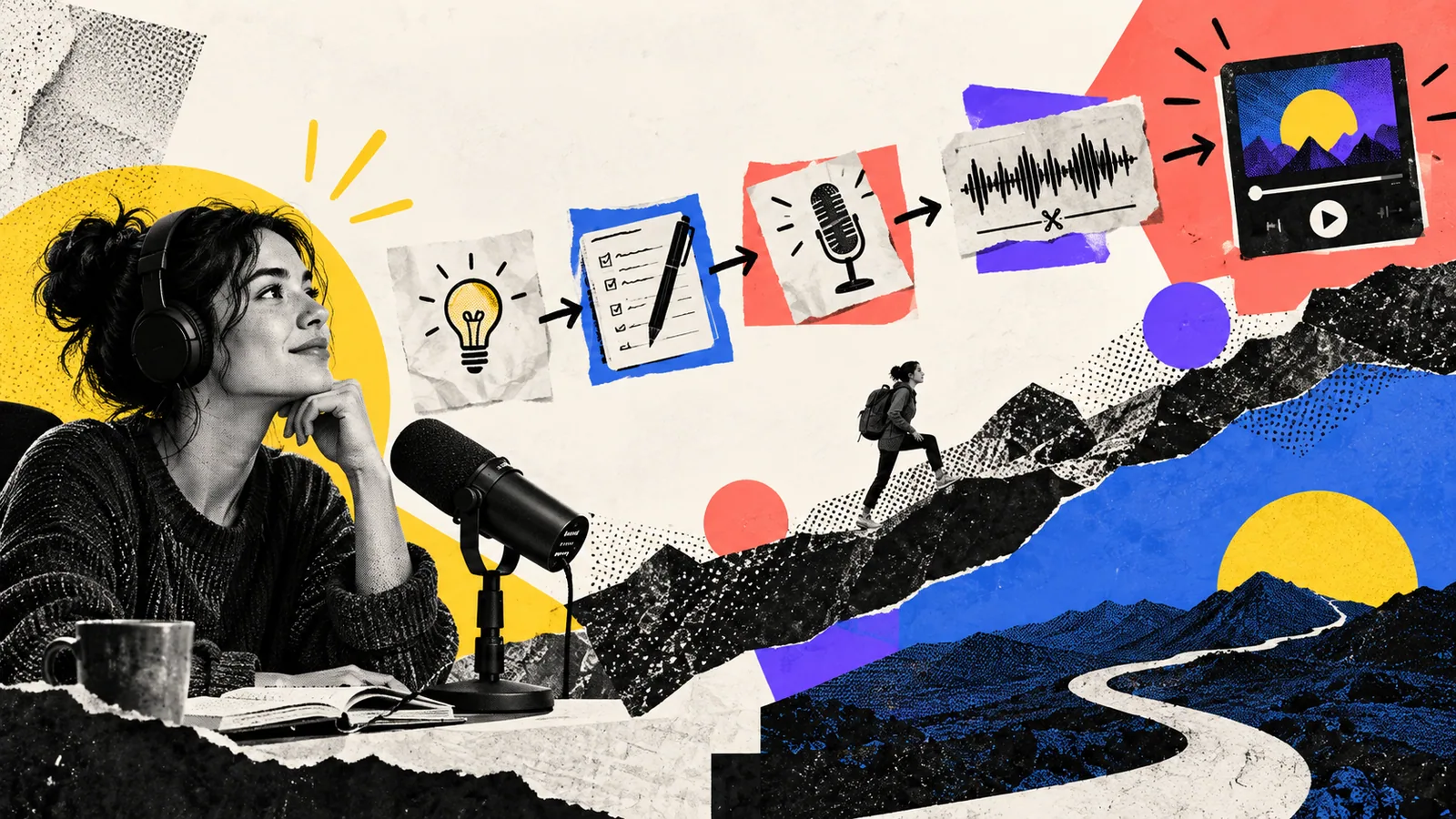
From topic to published episode
This process removes unnecessary decisions and gives you a workflow you can repeat for every episode.
- 1Define the audience
Turn a broad subject into one specific promise.
- 2Build the outline
Order the opening, main ideas, examples and close.
- 3Record a test
Check noise, echo, level and pace before continuing.
- 4Edit with purpose
Remove distractions without removing personality.
- 5Publish and measure
Use feedback and retention to improve the next episode.
Make a pilot in 15 minutes
Validate the idea before spending hours producing it.
- 5 minWrite the promise and three main ideas.
- 5 minRecord an opening and one concrete example.
- 5 minListen, note one improvement and choose the next step.
Four habits for better podcasting
Quality usually improves more through a consistent process than through new equipment.
A focused promise makes attention easier to hold.
Thirty seconds can prevent a complete retake.
Short sentences and concrete examples sound natural.
Look for patterns before changing format or length.
What to do after publishing
Share the episode with the specific audience you made it for and ask one precise question. Useful feedback reveals what was clear, where attention dropped and which subject deserves a follow-up.
Keep the script, recording settings and editing template. Turning each improvement into part of the workflow makes the next episode faster and more consistent.
Frequently asked questions
Do I need to buy a microphone to start?
No. Validate the format first with a phone or wired earphones in a quiet room.
How long should an episode be?
Long enough to fulfil the promise without repetition. For beginners, 10 to 20 minutes often makes consistent production easier.
Can I use AI to create a podcast?
Yes, for ideation, structure, writing or narration. Always review factual claims because AI-generated content can contain errors.