
 IdeasVoiceStory
You do not need a studio subscription or a shopping list to validate a podcast idea. A phone, a quiet room and free editing and hosting tools are enough to publish a useful first version.
Use the equipment you already own
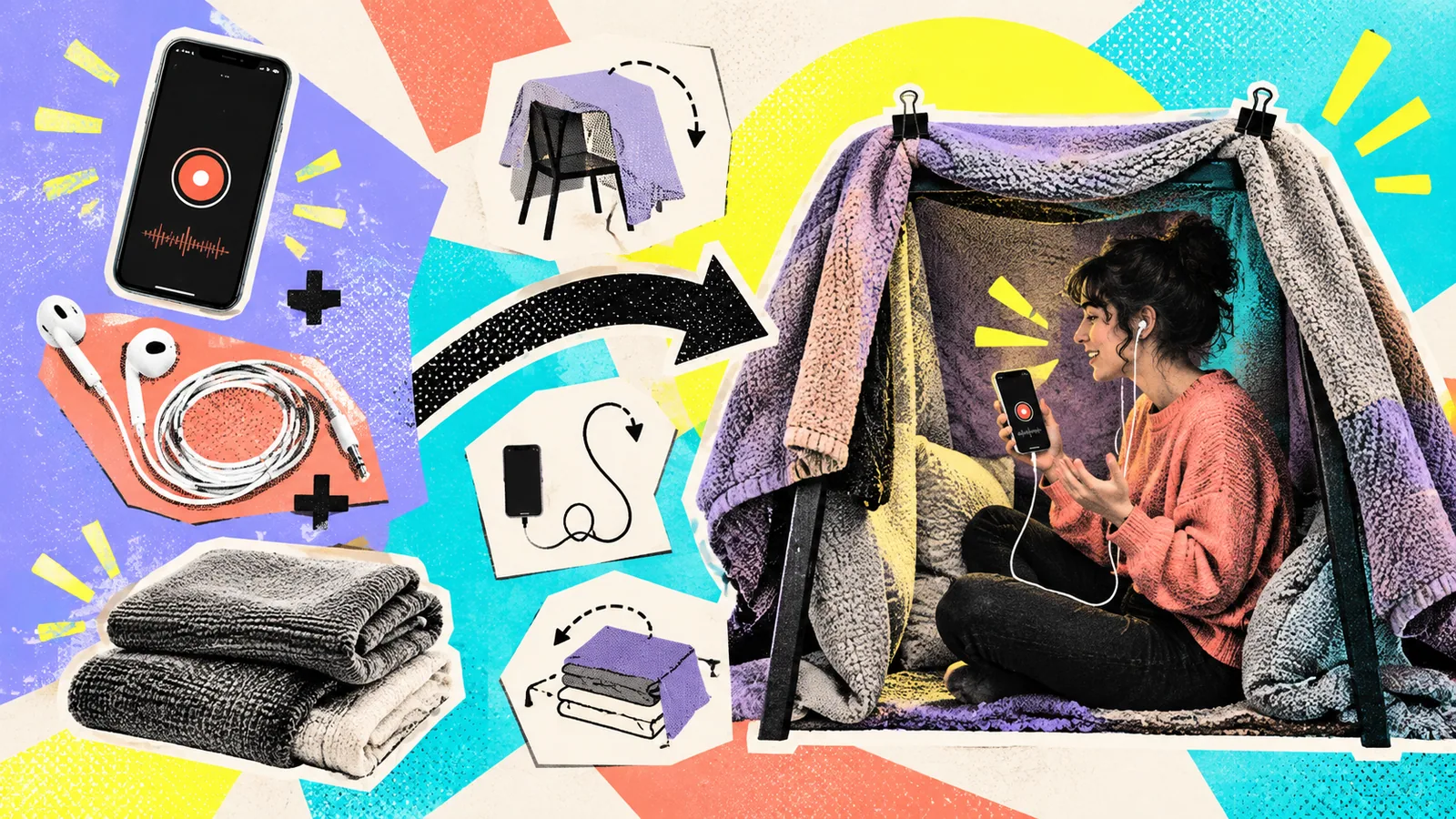
Start with the voice recorder on your phone or the microphone built into wired earphones. Record close to soft surfaces such as curtains, a wardrobe or a bed to reduce echo. Airplane mode prevents interruptions. The goal is not studio perfection; it is speech that stays clear and comfortable from beginning to end.
The essential principleA podcast starts with a clear promise and improves with every episode you publish.
Plan and script without paid software
A simple document is enough. Write the opening promise, three main points, one example for each and a final action. For an interview, prepare six open questions and two follow-ups. A useful outline keeps the conversation natural while preventing blank stretches and unnecessary repetition.
Edit only what improves the episode
Free editors can cut mistakes, reduce steady background noise and normalize volume. Work in that order and save a copy of the original recording. Avoid aggressive filters: they can make a voice metallic. A clean edit keeps the speaker human and removes only what distracts the listener.
Publish free now and upgrade after validation
Choose a free host that provides an RSS feed and distribution to major listening apps. Check storage, analytics, ownership and export options before accepting the terms. Publish three episodes before buying equipment. Real listening data will show whether better sound, faster editing or promotion deserves your first investment.
The minimum setup you need
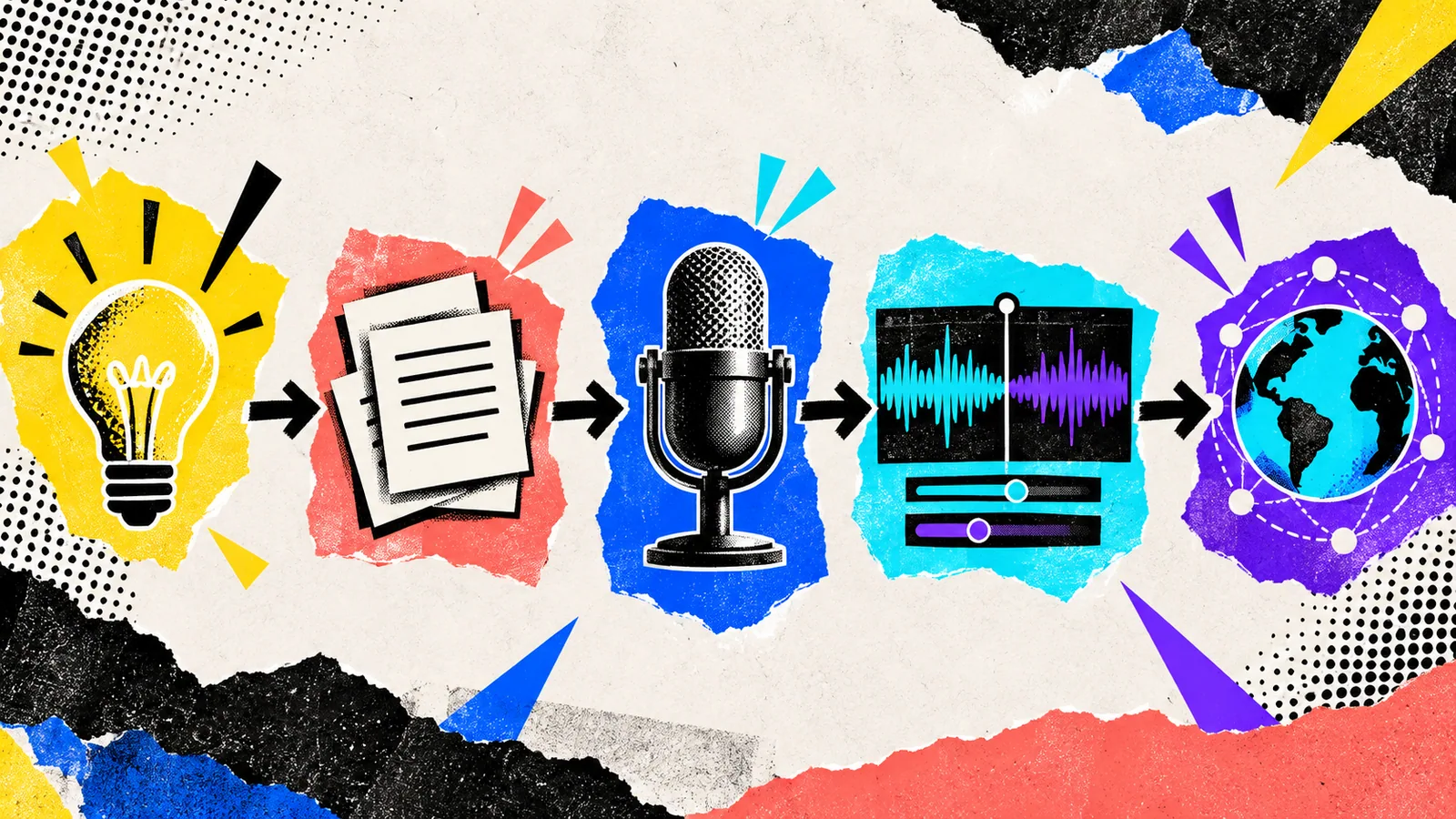
You do not need a professional studio. These five pieces cover the essential path from idea to publication.
Define who the show is for and what listening delivers.
Order ideas without making the voice sound read.
Placement and a quiet room matter more than price.
Cut mistakes, balance volume and keep the voice natural.
Store the audio and create the RSS feed for distribution.
Invest first in reducing noise and improving your workflow. Buy equipment only when a specific limitation repeatedly affects the result.
Make a pilot in 15 minutes
Validate the idea before spending hours producing it.
- 5 minWrite the promise and three main ideas.
- 5 minRecord an opening and one concrete example.
- 5 minListen, note one improvement and choose the next step.
Four habits for better podcasting
Quality usually improves more through a consistent process than through new equipment.
A focused promise makes attention easier to hold.
Thirty seconds can prevent a complete retake.
Short sentences and concrete examples sound natural.
Look for patterns before changing format or length.
Frequently asked questions
Do I need to buy a microphone to start?
No. Validate the format first with a phone or wired earphones in a quiet room.
How long should an episode be?
Long enough to fulfil the promise without repetition. For beginners, 10 to 20 minutes often makes consistent production easier.
Can I use AI to create a podcast?
Yes, for ideation, structure, writing or narration. Always review factual claims because AI-generated content can contain errors.