
 IdeasVoiceStory
A strong podcast intro does not summarize everything. It creates a useful gap between what the listener knows and what they want to discover, then promises to close it.
Use a four-line opening
Begin with a specific hook, identify the listener’s problem, promise the outcome and preview the path. For example: “Most new shows lose listeners before the topic begins. Today you will hear three openings that reach the point in under 30 seconds—and learn when each one works.” The language is concrete, relevant and easy to follow.
The essential principleA podcast starts with a clear promise and improves with every episode you publish.
Match the hook to the episode
A tutorial can open with a frustrating mistake, an interview with a surprising quotation and a narrative episode with a moment of unresolved action. Avoid false drama and vague claims such as “you will not believe what happened.” The hook should accurately represent the value delivered later.
Keep branding short and recognizable
Say the show name, host name and essential context once. A short sonic logo can make the opening recognizable, but long music beds delay the reason someone pressed play. New listeners need clarity; returning listeners need momentum. Aim for a complete intro between 15 and 40 seconds unless the format truly needs more.
Test the intro with retention data
Compare listener retention at 15, 30 and 60 seconds across several episodes. If attention drops during the same repeated segment, shorten or move it. If episodes with a clear question hold better, make that pattern part of the script. Change one element at a time so the result teaches you something useful.
Make a pilot in 15 minutes
Validate the idea before spending hours producing it.
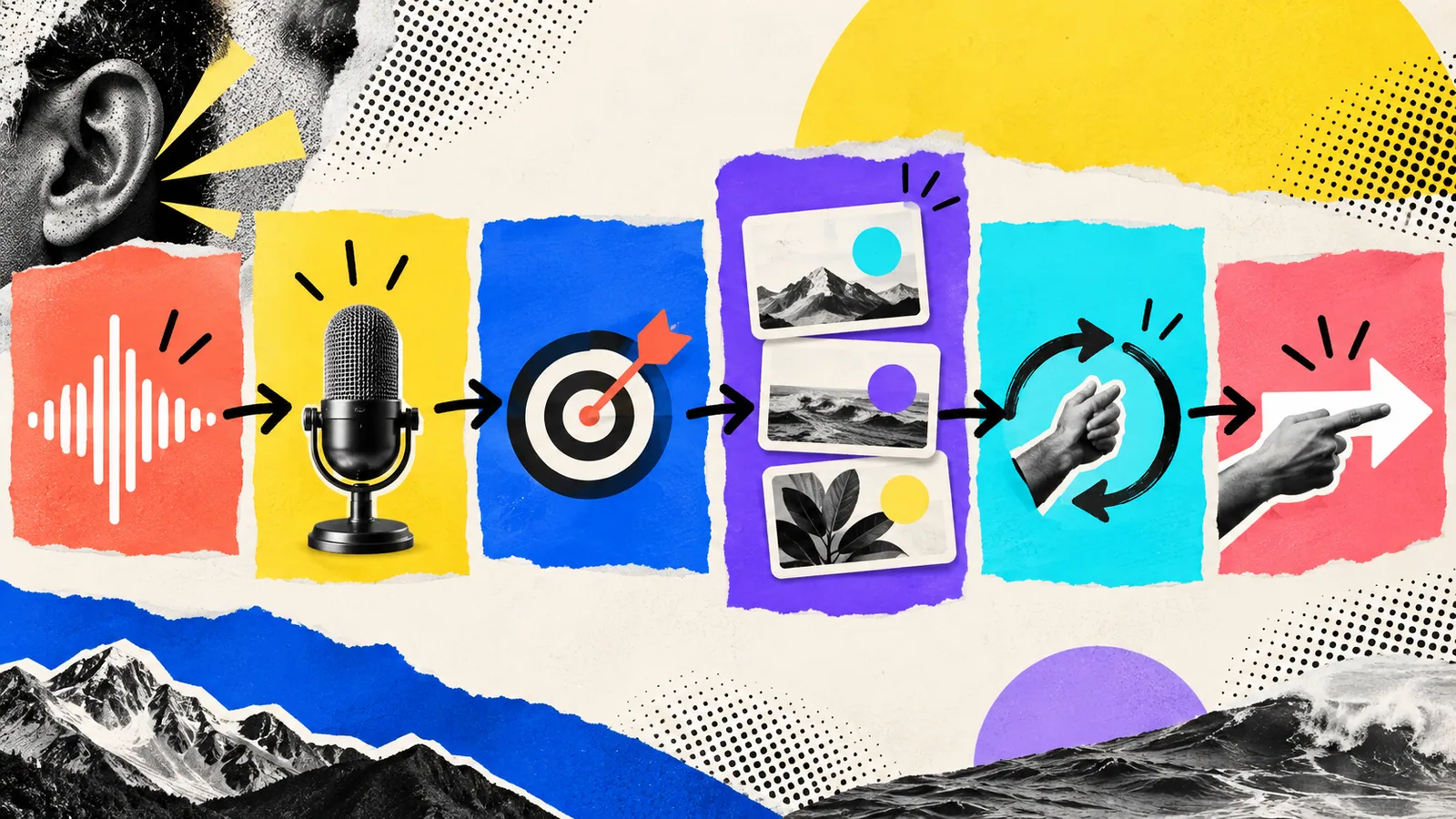
- 5 minWrite the promise and three main ideas.
- 5 minRecord an opening and one concrete example.
- 5 minListen, note one improvement and choose the next step.
Four habits for better podcasting
Quality usually improves more through a consistent process than through new equipment.
A focused promise makes attention easier to hold.
Thirty seconds can prevent a complete retake.
Short sentences and concrete examples sound natural.
Look for patterns before changing format or length.
Frequently asked questions
Do I need to buy a microphone to start?
No. Validate the format first with a phone or wired earphones in a quiet room.
How long should an episode be?
Long enough to fulfil the promise without repetition. For beginners, 10 to 20 minutes often makes consistent production easier.
Can I use AI to create a podcast?
Yes, for ideation, structure, writing or narration. Always review factual claims because AI-generated content can contain errors.