
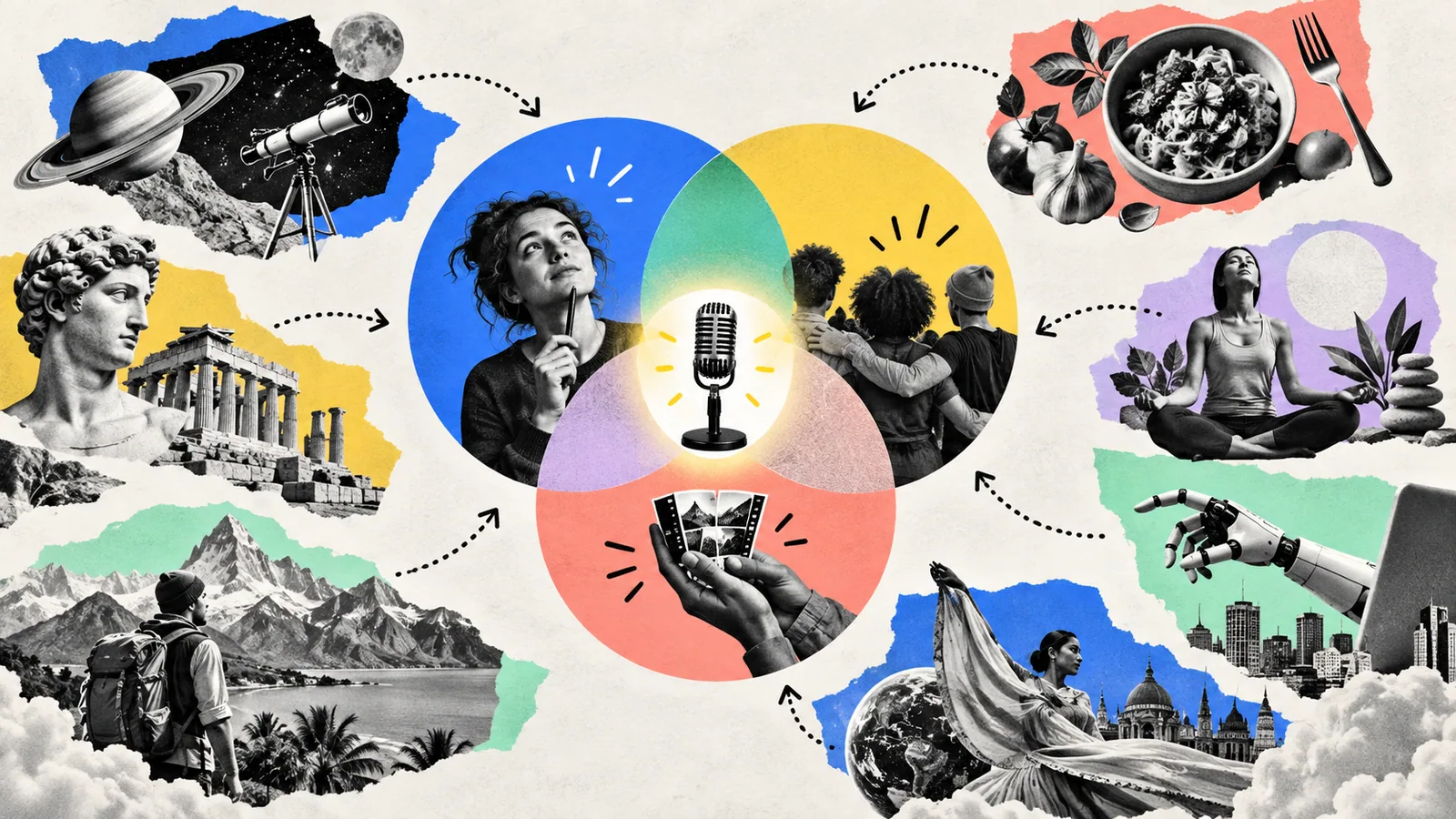
The best beginner podcast topic sits at the intersection of curiosity, access and audience need. It should produce many specific questions, not just one broad conversation.
25 beginner-friendly podcast topics
Try local history, first-job lessons, small business stories, everyday science, forgotten inventions, language learning, personal finance basics, neighborhood food, creative routines, beginner fitness, digital wellbeing, career changes, family recipes, book discussions, practical AI, sustainable habits, travel mistakes, remote work, myth and folklore, maker projects, community interviews, study methods, film craft, music discovery or a weekly answer to one listener question.
The essential principleA podcast starts with a clear promise and improves with every episode you publish.
Turn a broad interest into a clear angle
“Technology” is too broad; “how small shops use simple technology” has people, stakes and repeatable questions. Add an audience, place, constraint or point of view to sharpen the idea. Then write ten possible episode titles. If they all sound like the same conversation, narrow the angle or introduce a recurring format.
Validate the topic before committing
Search podcast apps and search engines for the exact questions you want to answer. Competition is evidence of demand, but look for gaps in language, depth, tone or audience. Record a five-minute pilot and share it with five relevant people. Ask what they expected next—not whether they liked it.
Build a repeatable first season
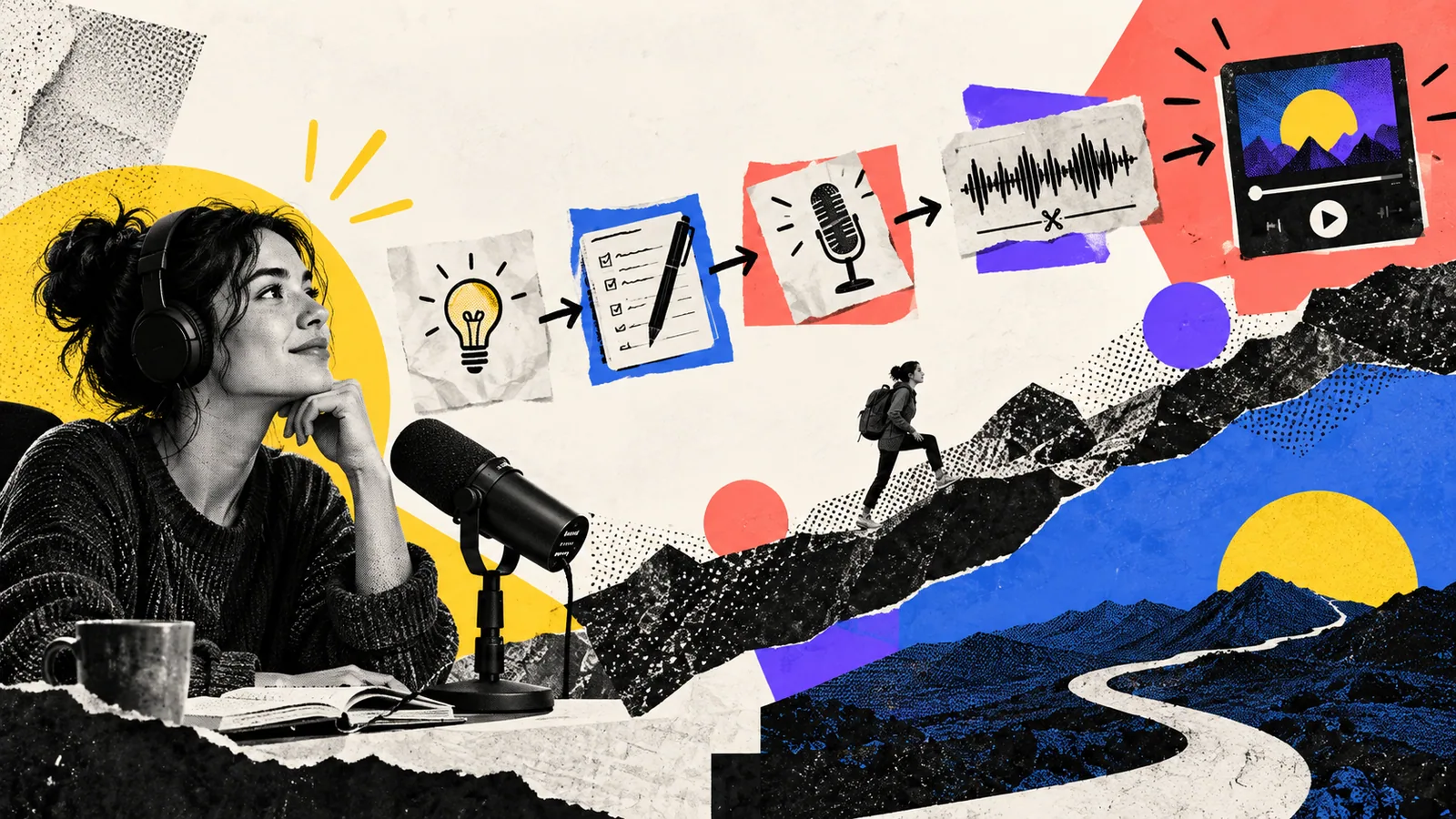
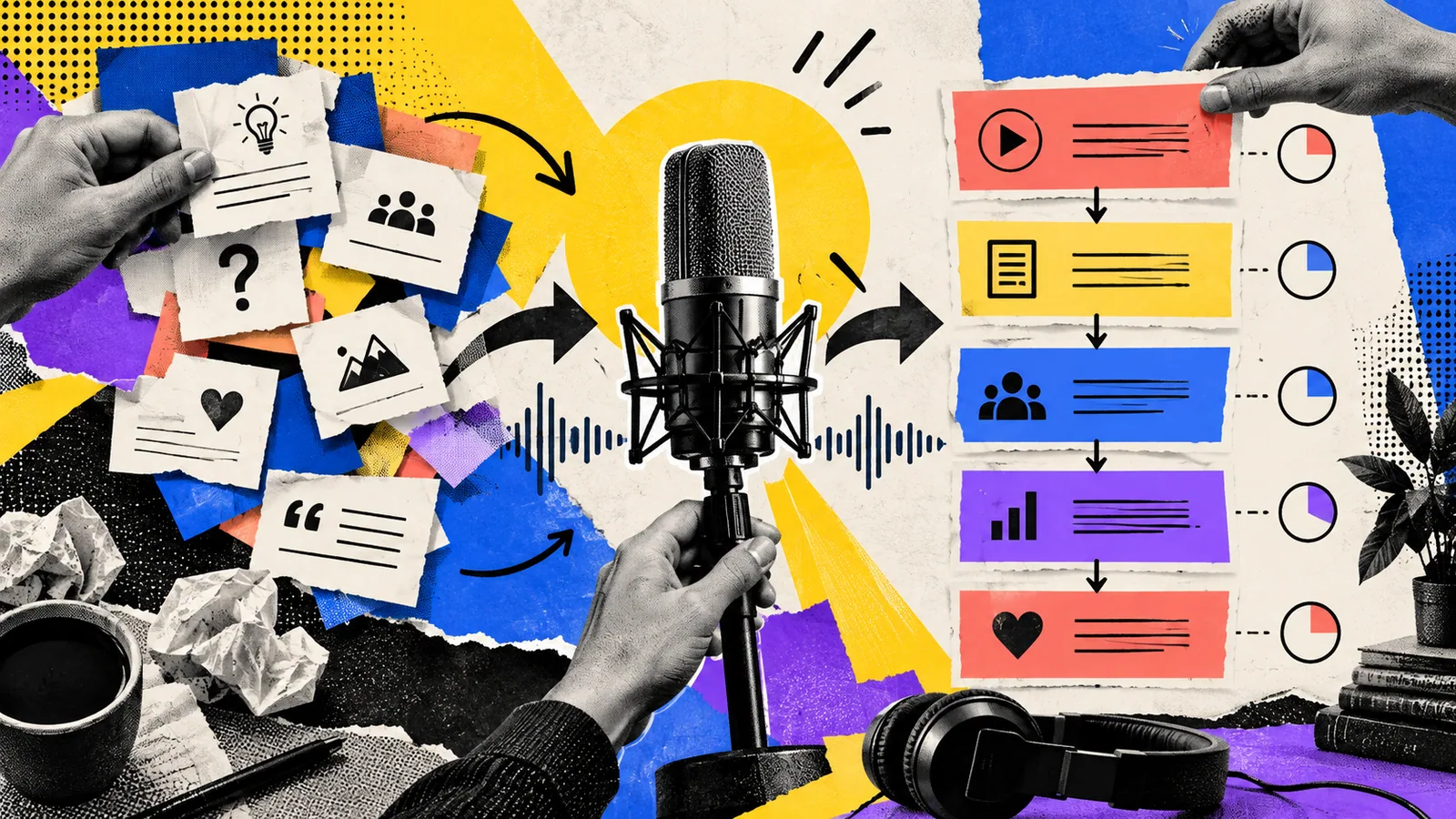
Plan six to eight episodes with a recognizable promise and increasing depth. Alternate accessible entry points with more specific stories. Use the same opening question, segment order or closing ritual to create familiarity. A short season gives you a finish line and enough evidence to decide whether the topic deserves another round.
Formats you can try
The same idea can become a very different experience depending on the format you choose.
 Solo episode
Explain one idea with one voice and a precise structure.
 Interview
Build the story through questions and follow-ups.
 Narrative documentary
Combine narration, scenes, archives and sound design.
 Roundtable
Compare perspectives with clear turns and goals.
The format changes, but the standard remains: a clear promise, an understandable structure and a reason to listen through the end.
What to do after publishing
Share the episode with the specific audience you made it for and ask one precise question. Useful feedback reveals what was clear, where attention dropped and which subject deserves a follow-up.
Keep the script, recording settings and editing template. Turning each improvement into part of the workflow makes the next episode faster and more consistent.
Frequently asked questions
Do I need to buy a microphone to start?
No. Validate the format first with a phone or wired earphones in a quiet room.
How long should an episode be?
Long enough to fulfil the promise without repetition. For beginners, 10 to 20 minutes often makes consistent production easier.
Can I use AI to create a podcast?
Yes, for ideation, structure, writing or narration. Always review factual claims because AI-generated content can contain errors.