Turn notes into a podcast
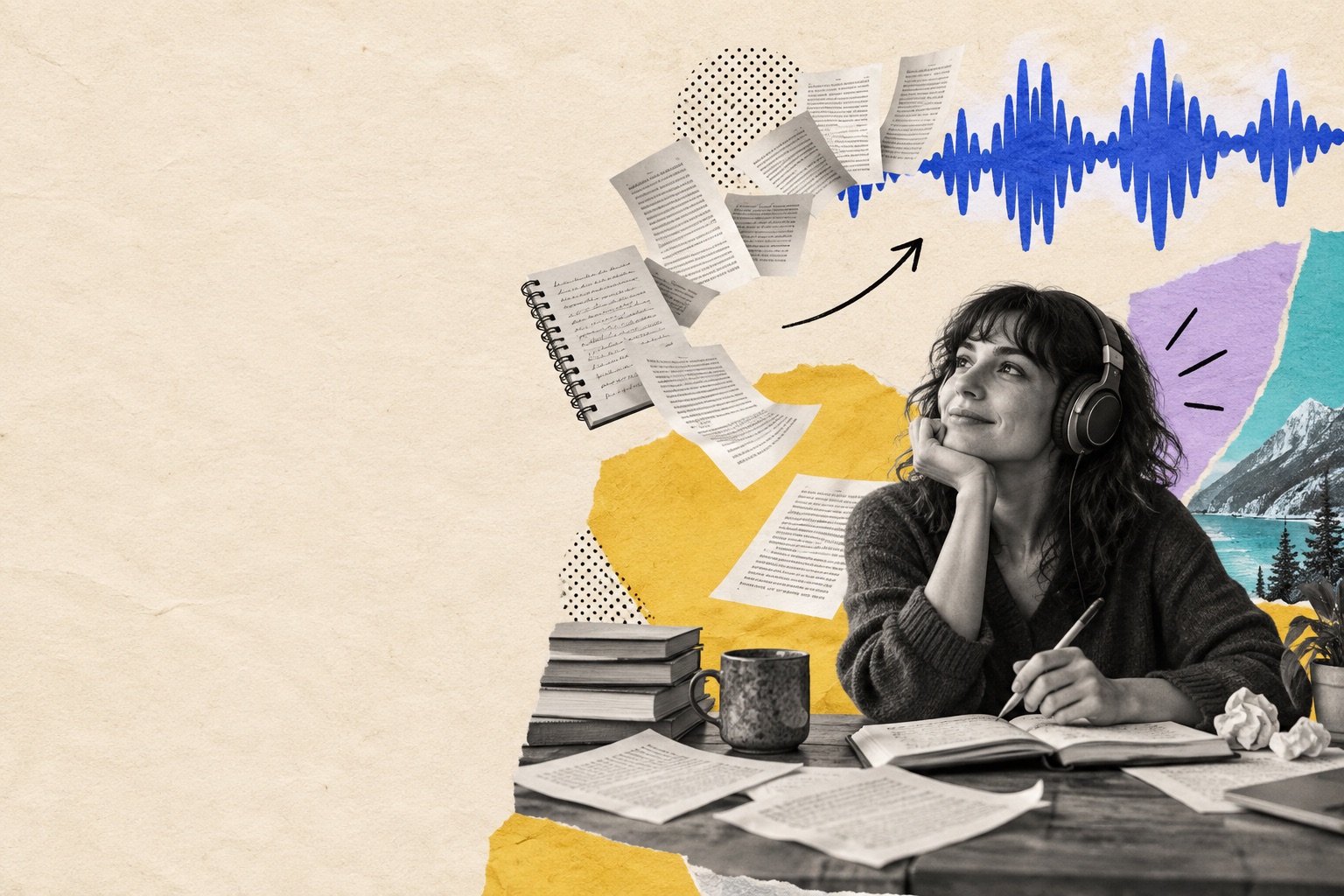
Notes are usually written for the person who took them. Missing context, abbreviations and visual arrows do not survive in audio. A useful episode rebuilds the logic so someone can understand it while walking.
Explore the guideThe short answer
Group your notes by one question, expand shorthand, provide definitions, turn diagrams into verbal examples and generate a short audio draft. Listen with the original notes nearby and fix every unsupported claim.
Make notes understandable without a screen
Organize the source
Put related notes together and label the topic. Scan handwritten pages carefully; check OCR before generating anything.
Set a listening goal
Ask for a recap, a worked example or a set of review questions. Avoid “cover everything” when the source spans a whole course.
Choose a spoken format
A single narrator may explain a concept most clearly. Two voices help only if one asks meaningful questions.
Review and export
Check definitions, names and numbers against the notes. Keep a link to the source for later revision.
A precise prompt for an audio recap
“Explain the three stages of photosynthesis to a 14-year-old using only these notes. Define chlorophyll once, give one everyday analogy and finish with three recall questions.”
Pick a tool by the output you need
Source-grounded listening
Use a notebook-style tool when you want to explore documents and return to their original passages.
A publishable episode
Use an editor or creator when you need a controlled script, voice and final file for an audience.
Simple narration
Text-to-speech may be enough if your notes are already rewritten as a clear spoken script.
Frequently asked questions
+Can I use photographed notes?
Only after verifying that the text has been recognized correctly; formulas and handwriting need special care.
+Should I keep citations?
Yes. Keep the original source and chapter or page references so you can check any claim.
+Can I publish the result?
Review the rights of course material and any people mentioned before sharing publicly.
Your next idea can be an episode
Turn the guide into a first draft. Review the result before sharing it.
Create my podcast