
Publishing on Spotify involves two separate jobs: creating the episode and delivering it through a valid podcast feed. Understanding that difference prevents duplicate shows and makes future distribution easier.
Prepare the episode and show details
Export the finished audio at a consistent level and prepare a square cover that remains legible at thumbnail size. Write a concise show description, select the language and category, and decide whether the content is explicit. Keep the show title distinctive but easy to pronounce and search.
The essential principleA podcast starts with a clear promise and improves with every episode you publish.
Choose hosting and understand the RSS feed
The hosting platform stores the audio and generates the RSS feed used by Spotify and other directories. Confirm that you can redirect or export the feed if you change providers. Add your email, artwork, description and at least one episode, then validate the feed before submitting it.
Submit, verify and check the public page
Submit the RSS feed through Spotify’s podcast management area and complete ownership verification. After approval, inspect the show on both desktop and mobile: title, cover, episode order, duration and links should all be correct. Fix feed data at the host rather than editing the same information in several places.
Use analytics to improve the next episode
Do not judge a launch only by total plays. Compare how many listeners stay after the opening, where they leave and which titles earn starts. Look for patterns across several episodes before changing the format. Analytics are most useful when they answer a specific question about attention or discovery.
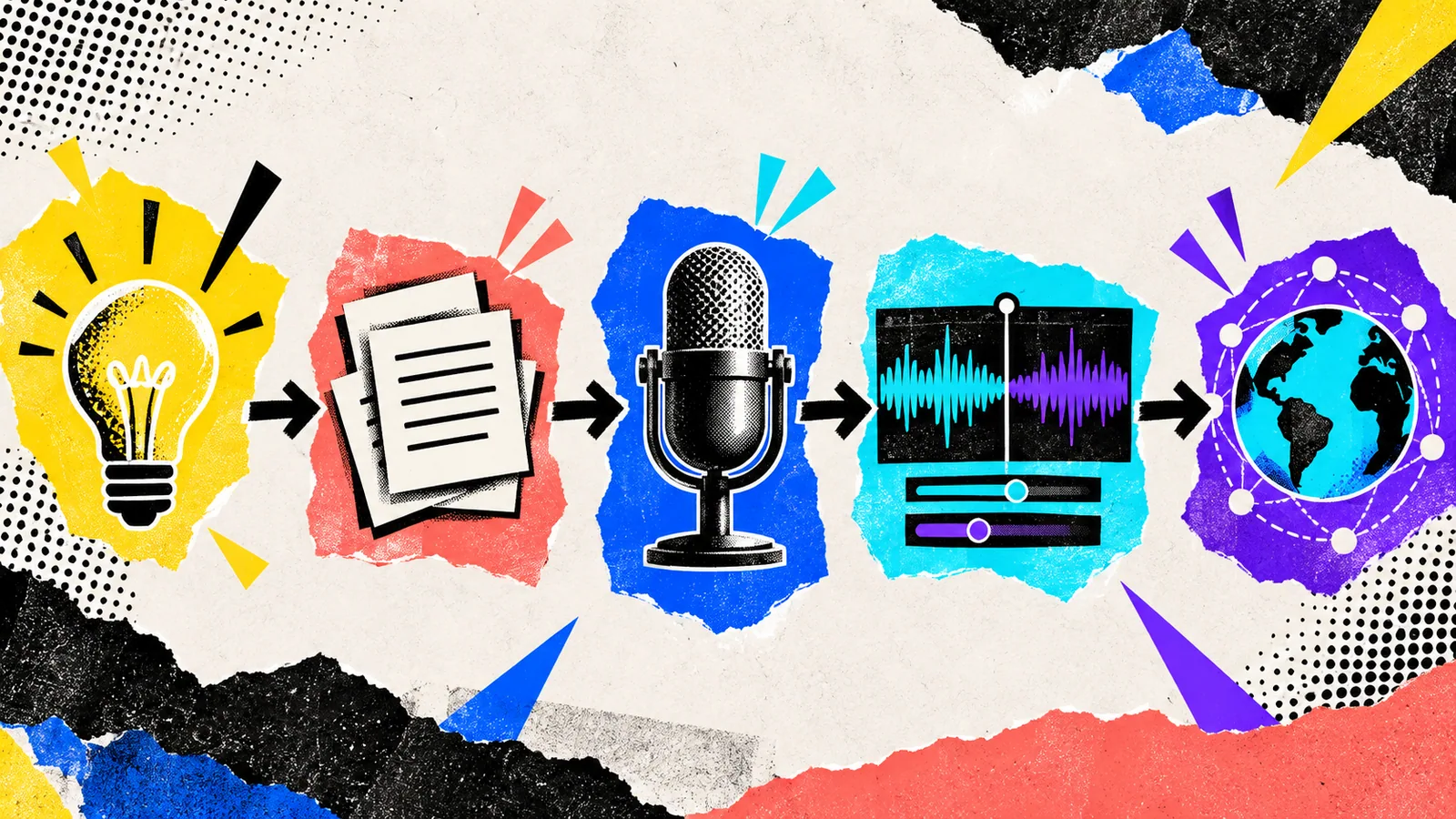
From topic to published episode
This process removes unnecessary decisions and gives you a workflow you can repeat for every episode.
- 1Define the audience
Turn a broad subject into one specific promise.
- 2Build the outline
Order the opening, main ideas, examples and close.
- 3Record a test
Check noise, echo, level and pace before continuing.
- 4Edit with purpose
Remove distractions without removing personality.
- 5Publish and measure
Use feedback and retention to improve the next episode.

What to do after publishing
Share the episode with the specific audience you made it for and ask one precise question. Useful feedback reveals what was clear, where attention dropped and which subject deserves a follow-up.
Keep the script, recording settings and editing template. Turning each improvement into part of the workflow makes the next episode faster and more consistent.
Frequently asked questions
Do I need to buy a microphone to start?
No. Validate the format first with a phone or wired earphones in a quiet room.
How long should an episode be?
Long enough to fulfil the promise without repetition. For beginners, 10 to 20 minutes often makes consistent production easier.
Can I use AI to create a podcast?
Yes, for ideation, structure, writing or narration. Always review factual claims because AI-generated content can contain errors.