
A podcast script should guide the voice without flattening it. The best template protects the promise, timing and transitions while leaving enough room for a natural delivery.
The essential podcast script template
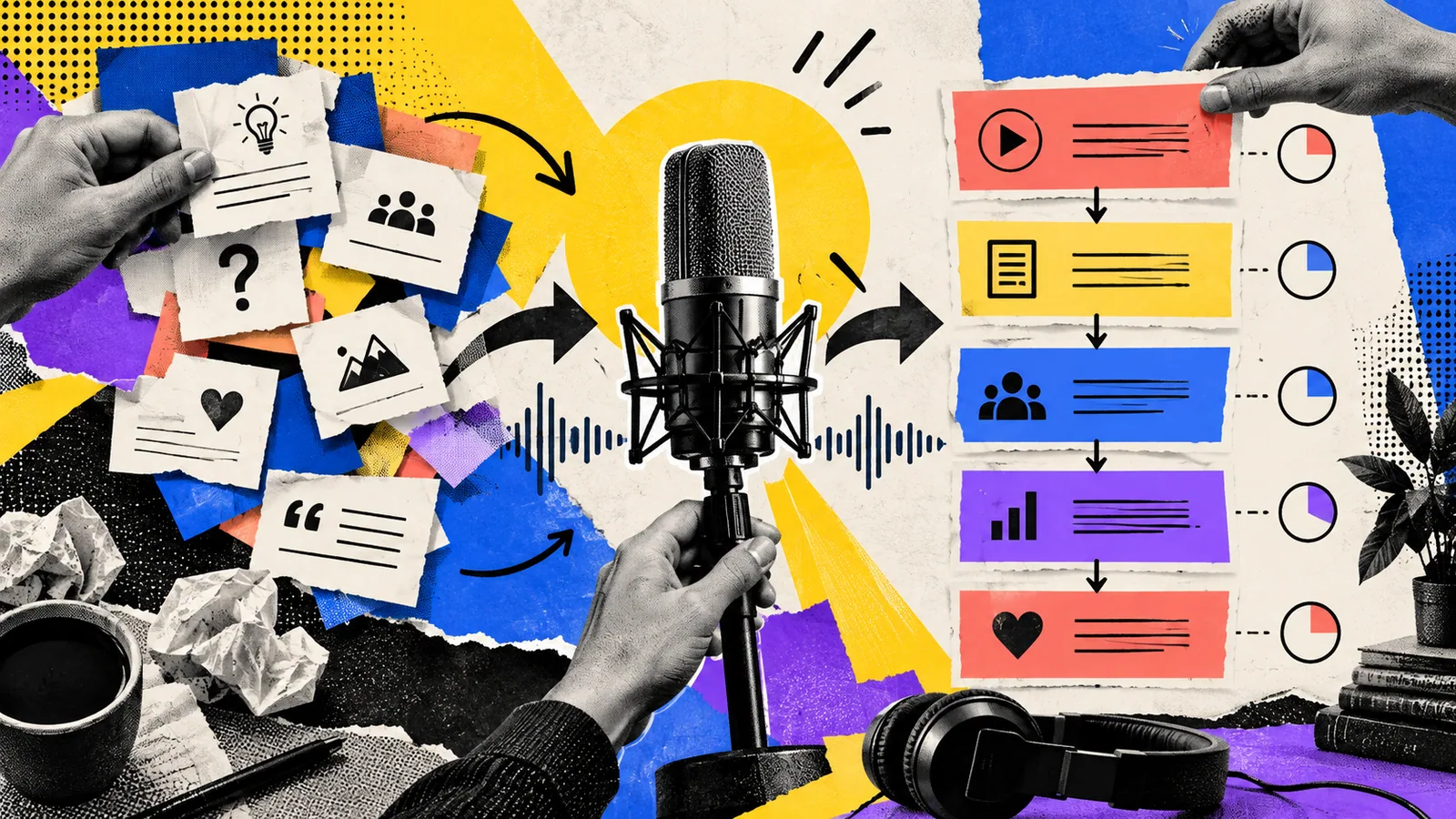
Use six blocks: cold open, welcome, promise, main segments, recap and call to action. Give every block a target duration and one job. A 15-minute solo episode might use 30 seconds for the opening, one minute for context, three four-minute sections, one minute for the recap and 30 seconds for the close.
The essential principleA podcast starts with a clear promise and improves with every episode you publish.
Write cues, not an essay
Mark emphasis, pronunciation, pauses and audio cues directly in the script. Use short sentences and contractions. Read every paragraph aloud and replace anything that sounds written rather than spoken. For conversational sections, bullet points often produce a more believable performance than fully scripted dialogue.
Adapt the template to interviews
Script the welcome, guest introduction, first question, transitions and closing. Keep the middle flexible with priority questions, optional follow-ups and facts that need verification. Put sensitive or essential questions early enough that time pressure will not remove them, but begin with something comfortable that helps the guest settle in.
Add production notes and a final fact-check
Separate spoken words from music, sound effects and editor notes with consistent labels. Verify names, dates, quotations and claims before recording. Time the final read at a natural pace and cut repetition before asking the narrator to speak faster. A clear script saves more editing time than any automatic cleanup tool.
The minimum setup you need
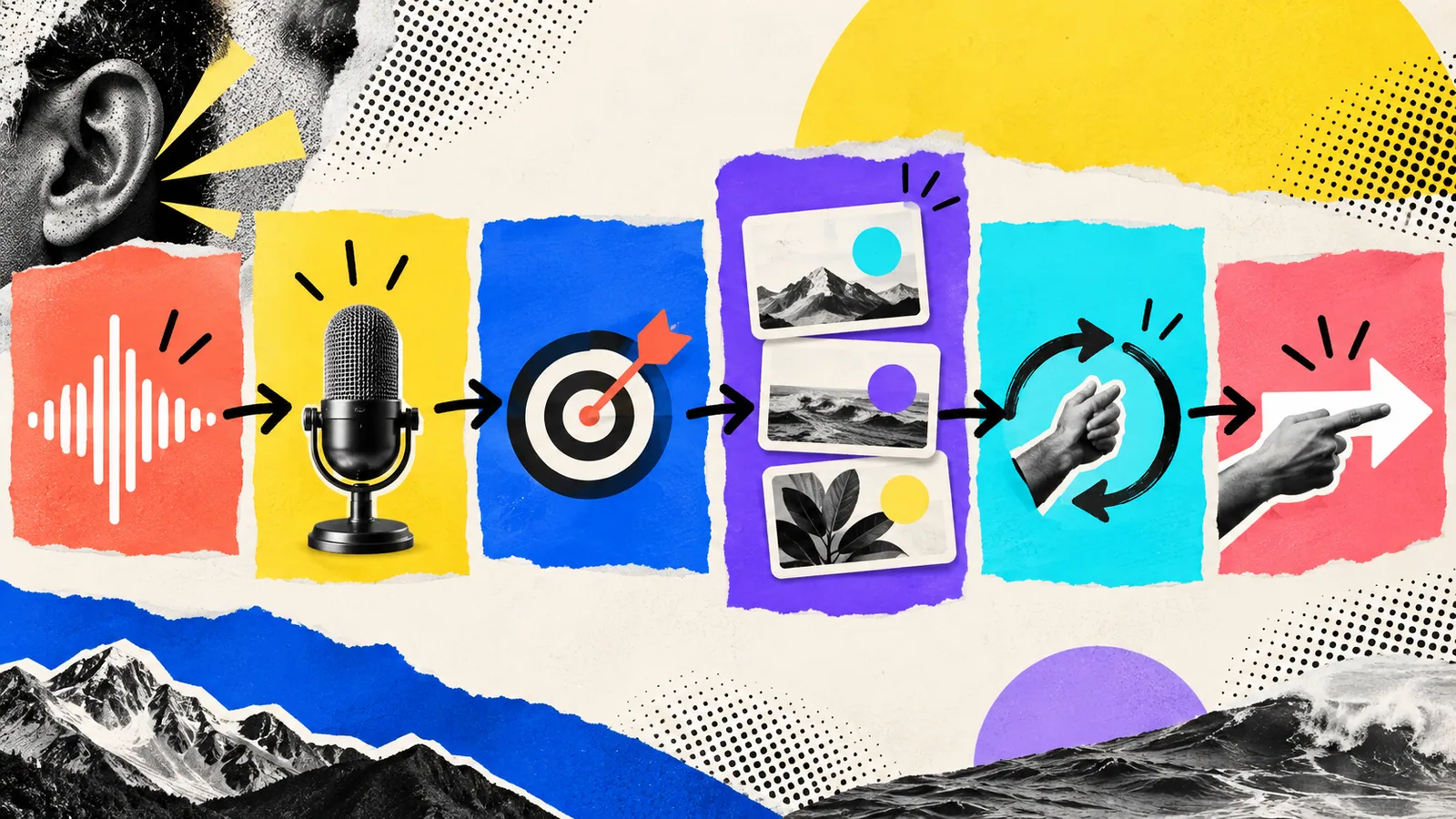
You do not need a professional studio. These five pieces cover the essential path from idea to publication.
Define who the show is for and what listening delivers.
Order ideas without making the voice sound read.
Placement and a quiet room matter more than price.
Cut mistakes, balance volume and keep the voice natural.
Store the audio and create the RSS feed for distribution.
Invest first in reducing noise and improving your workflow. Buy equipment only when a specific limitation repeatedly affects the result.
From topic to published episode
This process removes unnecessary decisions and gives you a workflow you can repeat for every episode.
- 1Define the audience
Turn a broad subject into one specific promise.
- 2Build the outline
Order the opening, main ideas, examples and close.
- 3Record a test
Check noise, echo, level and pace before continuing.
- 4Edit with purpose
Remove distractions without removing personality.
- 5Publish and measure
Use feedback and retention to improve the next episode.
Make a pilot in 15 minutes
Validate the idea before spending hours producing it.
- 5 minWrite the promise and three main ideas.
- 5 minRecord an opening and one concrete example.
- 5 minListen, note one improvement and choose the next step.
Frequently asked questions
Do I need to buy a microphone to start?
No. Validate the format first with a phone or wired earphones in a quiet room.
How long should an episode be?
Long enough to fulfil the promise without repetition. For beginners, 10 to 20 minutes often makes consistent production easier.
Can I use AI to create a podcast?
Yes, for ideation, structure, writing or narration. Always review factual claims because AI-generated content can contain errors.